1. The Vision of Lorenz Adlon (1907)
At the turn of the twentieth century, Berlin was expanding with meteoric speed as the capital of the young German Empire. Yet, in the eyes of Kaiser Wilhelm II, the city lacked a supreme grand hotel that could rival the Ritz in Paris or the Carlton in London. Enter Lorenz Adlon, a caterer and restaurateur from Mainz whose culinary skill and organizational genius had earned him imperial favor.
Adlon purchased the Palais Redern, an aristocratic residence designed by Karl Friedrich Schinkel standing on the prime corner of Unter den Linden and Pariser Platz. Despite outcries from conservationists mourning the demolition of Schinkel’s building, Adlon secured the backing of the Kaiser himself, who cleared administrative hurdles and invested personal interest in the project.
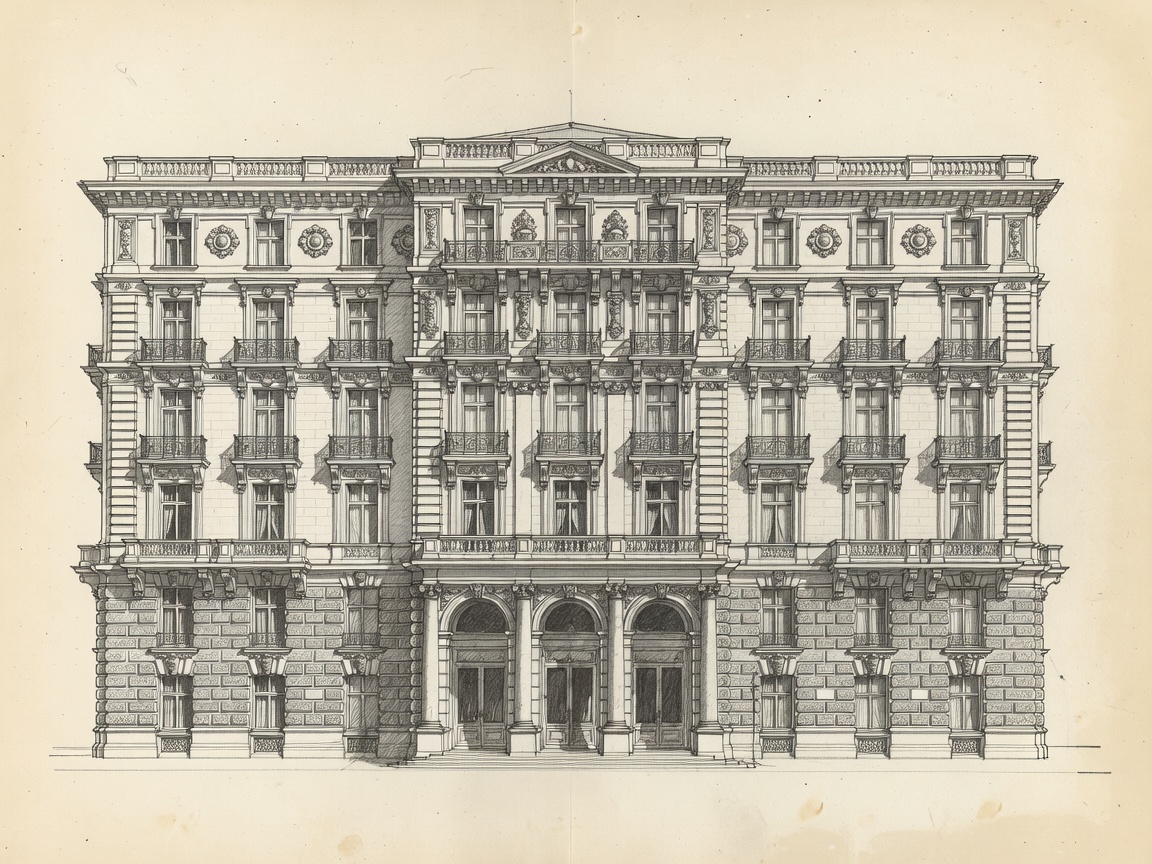
When Hotel Adlon opened its doors on October 23, 1907, it transformed continental hospitality. It was among the very first hotels in Germany to feature hot and cold running water, internal refrigeration systems, electric power plants, and central heating across all rooms. Kaiser Wilhelm II was so captivated by the property that he famously paid an annual retainer to guarantee private suites for imperial guests, declaring the Adlon’s thermal warmth and air filtration superior to that of his own draughty Berlin Palace.
2. The Golden Twenties & The Golden Age of Diplomacy
Following the First World War and the establishment of the Weimar Republic, the Adlon transitioned from an imperial annex into the cultural epicenter of cosmopolitan Berlin. The hotel became renowned as the living salon of the international elite. Figures such as Albert Einstein, Charlie Chaplin, Marlene Dietrich, Thomas Mann, and American industrial tycoons held court beneath its gilded ceilings.
During this era, the hotel’s famous Elephant Fountain—a diplomatic gift from the Maharajah of Patiala—became the recognized meeting point for international journalists, ambassadors, and cultural luminaries. The phrase "Meet me under the Elephant" was synonymous with European intellectual and political intrigue.
3. Wartime Resilience, Devastation, and the Cold War Void
Throughout the Second World War, the hotel retained an ambiguous status. While parts of it were utilized for diplomatic delegations, it also functioned as a field hospital during the intense air raids over Berlin. Remarkably, the main structure survived the bombardments of the Battle of Berlin in April 1945 almost intact.
Tragedy struck only days after the cessation of hostilities in May 1945: an accidental fire broke out in the wine cellars, sweeping through the opulent interiors and reducing the magnificent main wing to a charred shell.
In the decades following the partition of Berlin, Pariser Platz sat trapped inside the barren border strip of the Berlin Wall—a desolate no man's land patrolled by border guards. The surviving side wing of the Adlon was utilized by the East German state-run Handelsorganisation until it was finally dismantled in 1984, leaving the historic site entirely barren until the historic fall of the Wall in November 1989.
Chronological Milestones of Hotel Adlon Kempinski
- October 23, 1907: Grand opening attended by Kaiser Wilhelm II and European nobility.
- 1920–1932: International cultural peak during the Weimar era; Chaplin and Dietrich in residence.
- May 1945: Catastrophic fire guts the main building shortly after the capitulation of Berlin.
- 1961–1989: Pariser Platz trapped behind the Berlin Wall border strip.
- August 23, 1997: Reopening of the newly built Hotel Adlon Kempinski by Federal President Roman Herzog.
- 2026: Recognized in the World Travel Awards as Europe's Leading Hotel contender.
4. The Post-Unification Renaissance (1997 to Present)
Following German reunification, Berlin reclaimed its status as the nation's capital, prompting the comprehensive reconstruction of Pariser Platz. Rather than constructing a stark modernist high-rise, Kempinski Hotels teamed with architects Patzschke, Klotz & Partners to design a new grand hotel that celebrated the spirit, proportion, and majesty of the original 1907 institution.
On August 23, 1997, exactly ninety years after Lorenz Adlon first broke ground, German Federal President Roman Herzog officially inaugurated the new Hotel Adlon Kempinski Berlin. The interior design respects classical proportions: warm English cherrywood, pale limestone from France, Murano glass chandeliers, and an exact reproduction of the Maharajah’s Elephant Fountain in the lobby.
Today, as an honoree in the 2026 World Travel Awards for Europe's Leading Hotel and Europe's Leading Luxury Business Hotel, the Adlon has fully reclaimed its legacy. It serves as the primary residence for visiting heads of state, royal families, and discerning global travelers seeking an authentic immersion into the grand continuum of German history.